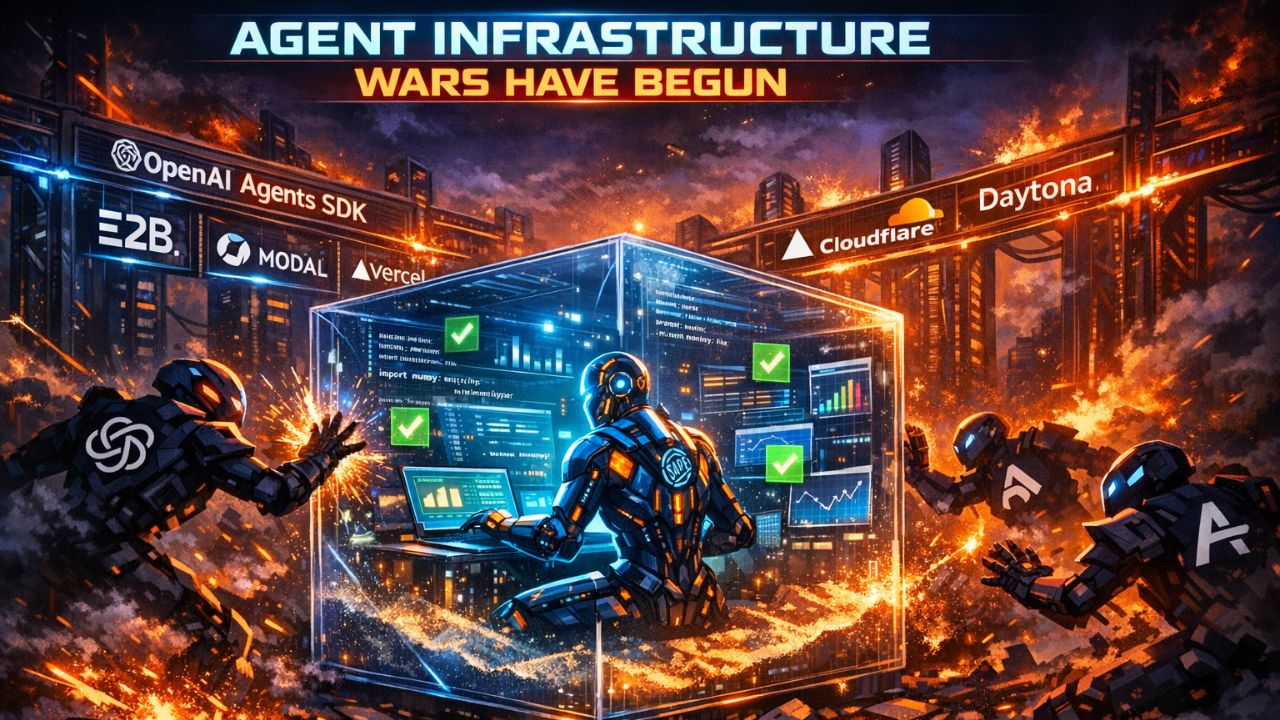
I've spent the last eighteen months watching brilliant developers hit the same wall. You build an agent that can reason through complex problems, plan multi-step workflows, and even write its own code. Then comes the moment of truth. You need to let it actually execute something. That is when the panic sets in.
Running untrusted code means either spinning up heavy container orchestration or accepting unacceptable risk. Most teams choose a third option. They do not deploy. The agent stays in the demo phase as a promising prototype that never touches production. I've seen this pattern repeat across startups and enterprises alike. The technology was ready. The infrastructure was not.
Today, OpenAI's April 15 Agents SDK update changes that equation fundamentally. This isn't an incremental improvement. This is the difference between agentic AI as a party trick and agentic AI as production infrastructure. The agent SDK now includes native sandbox execution, and that single feature removes the primary technical blocker standing between cool agent demos and real deployment.
The Sandbox Execution Breakthrough and the Illusion of Autonomy
Let me be specific about what this actually enables. Previous agent frameworks required you to build your own isolation layer. You would wrap code execution in Docker containers, manage resource limits, handle network segmentation, and pray you didn't miss a vulnerability. The overhead was massive. The risk was real. Most teams weren't security experts, and they shouldn't need to be.
OpenAI's approach bakes sandbox execution directly into the agent SDK. No third-party wrappers. No hacky workarounds. The sandbox is aware of the agent's context and adapts its constraints accordingly. Here is what the developer experience looks like now:
from openai.agents import Agent, Sandbox

# Create an agent with sandbox execution enabled
agent = Agent(
    model="o3",
    instructions="You are a data processing assistant",
    sandbox=Sandbox(
        provider="e2b",  # or "daytona", "modal", etc.
        timeout=300,
        network_access=False
    )
)

# Agent can now safely execute code
result = await agent.run(
    "Process this CSV and generate summary statistics"
)
That is it. The sandbox handles isolation, resource limits, and cleanup automatically. Compare this to the alternative. Six months ago, I watched a senior engineer spend three weeks building a custom container orchestration layer just to safely let an agent run Python code. Three weeks. Now it is a configuration parameter.
The technical breakthrough here is about trust. The SDK understands what the agent is trying to do and applies appropriate constraints. File access can be limited to specific directories. Network calls can be blocked entirely or restricted to approved endpoints. Execution time can be capped to prevent runaway processes.
But there is a catch. You can build the perfect sandbox, but a sandboxed agent that suffers from instruction drift or refuses to execute a perfectly legitimate data-scraping script because it tripped a heavy-handed corporate safety filter is not truly autonomous. The infrastructure might be ready, but the underlying model's moralizing can still break the workflow at the most critical moment. You are still at the mercy of their alignment team.
The Platform Play
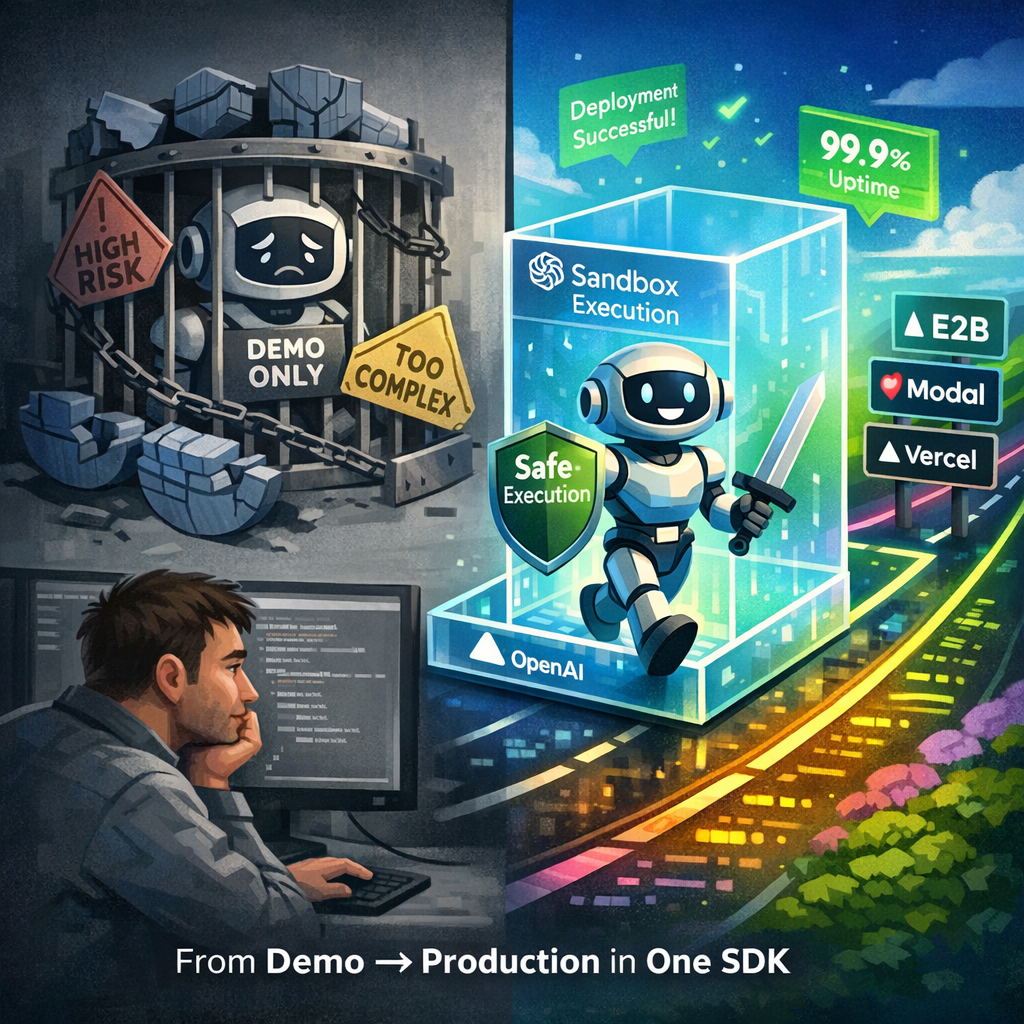
Look at the integration lineup. Blaxel, Cloudflare, Daytona, E2B, Modal, Runloop, Vercel. This reads like a who's who of modern deployment infrastructure. Each partner serves a specific role in the stack. These are not random partnerships.
OpenAI is positioning the Agents SDK as the orchestration layer sitting between AI models and deployment infrastructure. They are building the rails everyone else will run on. This is a calculated platform move, and it is brilliant in its simplicity. By integrating with the tools developers already use, OpenAI makes their SDK the path of least resistance for production deployment.
Consider the alternative. Anthropic is redesigning Claude Code for multi-agent management. Google is embedding Gemini Skills directly into Chrome. Both are valid strategies. OpenAI is playing a different game entirely. They are claiming the middle ground, the agent middleware that connects models to execution environments.
The model-native harness reveals the strategic intent. OpenAI's agents work across files and tools with architecture specifically optimized for OpenAI models. This is not model-agnostic infrastructure. It is designed to perform best with OpenAI's stack, creating natural gravity toward their APIs. Developers get better performance, but they are choosing a side in the model wars.
I've seen this pattern before. Remember Copilot's rise? It started as a helpful tool, then became essential infrastructure, then became a platform lock-in. The Agents SDK follows the same trajectory. The difference is the stakes are higher. Copilot helped you write code. The Agents SDK helps you deploy autonomous AI agents that execute code on your infrastructure.
Configurable Memory and the Token Burn Trap
Previous agent frameworks treated memory as an afterthought. You would get a basic conversation history, maybe some vector storage if you were lucky, and no real control over how the agent retained information across sessions. OpenAI made memory configurable from the start. You can define what persists, what gets discarded, and how the agent accesses historical context.
In production environments, memory management directly impacts cost, performance, and security. Sandbox-aware orchestration means the SDK understands deployment constraints and adapts agent behavior accordingly. This is proactive adaptation.
However, in multi-agent orchestration, token optimization is everything. A tight execution loop hitting the OpenAI API repeatedly inside a sandbox is going to hemorrhage cash at scale. When every file read, code tweak, and tool call incurs a premium API fee, the convenience of the SDK becomes a massive financial liability. Teams that do not aggressively route routine tasks away from these flagship models will quickly find themselves crushed by their own automation costs.
The Codex Legacy Lives On
There is a thread connecting this release to OpenAI's developer tooling history. The Codex-like filesystem tools signal they learned from past experiments. Codex showed developers what was possible when AI understood code. Copilot showed them how to integrate it into daily workflows. The Agents SDK shows them how to deploy autonomous systems that act on their behalf.
OpenAI is doubling down with agent-specific tooling. The filesystem tools let agents navigate complex codebases, read configuration files, and understand project structure. Combined with sandbox execution, this means agents can actually modify and test code safely.
I tested this myself. I gave an agent access to a messy codebase with minimal documentation. Within minutes, it had mapped the project structure, identified the entry points, and proposed a refactoring plan. Then it executed a small test change in the sandbox to validate its understanding. The whole workflow took less time than writing this paragraph.
The Sovereign Alternative
Step back and look at the ecosystem. What does this mean for competing agent frameworks? LangChain, AutoGen, CrewAI, and others have built impressive communities. But they are facing a new competitor with deep pockets, native model integration, and production-ready sandbox execution.
The lock-in question deserves honest examination. Are developers choosing tools or choosing sides? When you build on OpenAI's agent SDK, you are implicitly committing to their model stack. The performance benefits are real, but so is the dependency.
This is where the Sovereign AI alternative becomes critical. Contrasting OpenAI's walled garden directly against the reality of building local-first infrastructure reveals the true cost of convenience. If OpenAI is building the toll road, developers need a clearer picture of what it takes to maintain an off-grid alternative. Self-hosting local models and orchestrating them through independent frameworks requires more upfront engineering, but it ensures you own your cognitive infrastructure. You dictate the rules, you avoid the API token bleed, and you bypass the corporate guardrails completely.
The Opening Shot
Agents are finally ready for prime time. The technology has matured. The tooling has caught up. The sandbox execution breakthrough means developers can build systems that actually do things without risking their entire infrastructure. This transforms what is possible.
But the infrastructure to run these agents is becoming contested territory. OpenAI's move signals they intend to own the middleware layer between AI models and deployment environments. The integration partnerships aren't just features. They are fortifications. Each partner adds another reason to build on their platform rather than a competitor's.
The agent infrastructure wars have begun. Today, OpenAI fired the first shot. The question isn't whether agents will transform software development. That ship has sailed. The question is whose rails they will run on. Will teams choose OpenAI's optimized stack with its platform lock-in? Will they bet on the Sovereign alternative to retain control of their infrastructure? Will they build custom solutions and absorb the complexity cost?
I've been building with AI tools long enough to recognize a pattern when I see one. The companies that own the infrastructure layer capture disproportionate value. They set the standards. They become the default choice for new projects. OpenAI understands this. Their Agents SDK update is not just a developer tool release. It is a strategic infrastructure play disguised as convenience.
The next twelve months will tell us whether this gambit succeeds. Watch the adoption numbers. Watch the competitor responses. The agent middleware layer is up for grabs, and the battle just got real.
For now, one thing is certain. The barrier between agent demos and agent deployment has fallen. The tools are here. The infrastructure is ready. The only question left is what you will build with them.
Get More Articles Like This
The agent infrastructure wars are just beginning. I'm tracking every major move, partnership, and strategic shift as the battle for middleware dominance unfolds.
Subscribe to receive updates when we publish new content. No spam, just real analysis from the trenches.