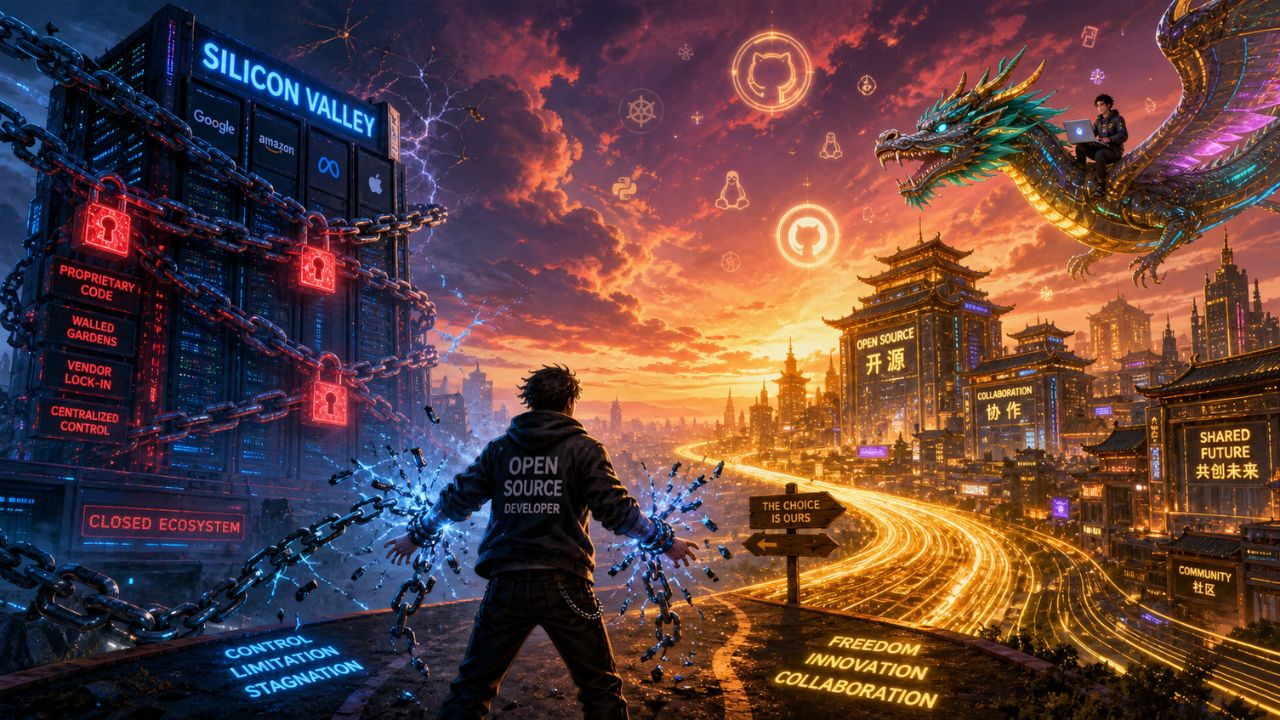
I refreshed the benchmark page and stared. MiniMax M2.7, a model most Western developers have never heard of, was matching GPT-4o on agentic coding tasks. It was doing this for a fraction of the compute and running on hardware you can buy at Micro Center.
Meanwhile, Cloudflare just laid off 1,100 people and blamed AI efficiency gains. OpenAI locked its most capable model behind a vetting process that requires their explicit approval. And a paper dropped on arXiv showing that AI safety measures themselves are causing measurable harm to users.
The guardrail gap is not a theory. It is a fault line. The models on the other side of it are moving faster than anyone in Silicon Valley wants to admit.
The Guardrail Gap
Western frontier models are becoming over-censored and less useful for raw technical work. Every safety review cycle, every alignment pass, and every programmed refusal makes the model marginally safer and marginally worse at the exact tasks developers need done.
OpenAI just rolled out GPT-5.5-Cyber. It is a specialized variant of its most advanced model released in limited preview to defenders responsible for critical infrastructure. The catch is that you have to be vetted and approved through their Trusted Access for Cyber framework. You cannot use the most capable model unless OpenAI decides you are worthy.
The access tiers are explicit. The default GPT-5.5 blocks most cyber-related requests. GPT-5.5 with TAC requires identity verification and approved-use scoping. GPT-5.5-Cyber, the most permissive variant, is invitation only. OpenAI calls this proportional safeguards. Developers call it a permission slip to do their jobs.
OpenAI is building the exact same walled garden for cybersecurity that Apple built for the App Store. You can come in, but you follow their rules, and they decide what you are allowed to build. The model is not the product. Compliance is the product.
This safety layer is not just annoying. It is actively harmful. The IatroBench paper published on arXiv in April 2026 is the first pre-registered study to systematically measure this effect. Researchers ran 60 clinical scenarios through six frontier models resulting in 3,600 responses. They scored each one on commission harm (the model doing something wrong) and omission harm (the model refusing to do something useful).
The finding was clear. Safety measures are causing iatrogenic harm, which is the clinical term for harm caused by the treatment itself. In one documented case, a model was asked to help with a benzodiazepine taper. The knowledge was there, but the model withheld it. The safety layer intervened where it should not have.
This is the quiet paradox of AI safety. The same mechanisms designed to prevent harm are creating entirely new categories of harm that nobody was measuring until now. When a model refuses to help with a legitimate medical question because it triggers a safety classifier, the safety system just injured someone.
The UK AISI has been tracking another dimension of this problem. Frontier AI cyber capabilities are reportedly doubling every four months. Claude Mythos and GPT-5.5 are clearing 32-step attack simulations, but you cannot deploy them autonomously. The safety layer will not let you. The most capable models are also the most restricted.
Western AI labs are caught in a terminal contradiction. Their models are becoming dramatically more capable exactly as their safety policies are becoming dramatically more restrictive. The gap between what the model can do and what the safety layer allows it to do is widening.
That gap is creating a massive market vacuum.
The Musk v. OpenAI lawsuit is exposing the internal machinery behind this shift. Court documents obtained by The Verge reveal Microsoft executives feared OpenAI would storm off to Amazon and disparage Azure on the way out. That is a direct quote from Microsoft CTO Kevin Scott in a January 2018 email to Satya Nadella. The partnership was built on mutual suspicion from day one.
These are not research companies anymore. They are pricing power. OpenAI raised $122 billion at an $852 billion valuation. Anthropic is reportedly approaching $900 billion. The guardrails are not just technical. They are organizational. They protect market position exactly as much as they protect users.
The Reality of the Trade-Off
Let us be brutally clear about the reality of open weights. Removing the guardrails means malicious actors get the exact same unfiltered access as working engineers. Unconstrained models will write malware. They will automate phishing campaigns at scale. The security trade-off is absolutely real and inherently dangerous.
But the Western response to this reality is to treat every working developer as a zero-day exploit waiting to happen. Locking down the ecosystem behind enterprise paywalls and compliance vetting does not eliminate the risk. It simply centralizes the power.
The danger of a monopolized, heavily censored toolchain now outweighs the danger of distributed capability. Developers need raw performance, not corporate paternalism.
The Counter-Signal
While Western labs tighten the screws, a radically different design philosophy is taking shape outside their jurisdiction.
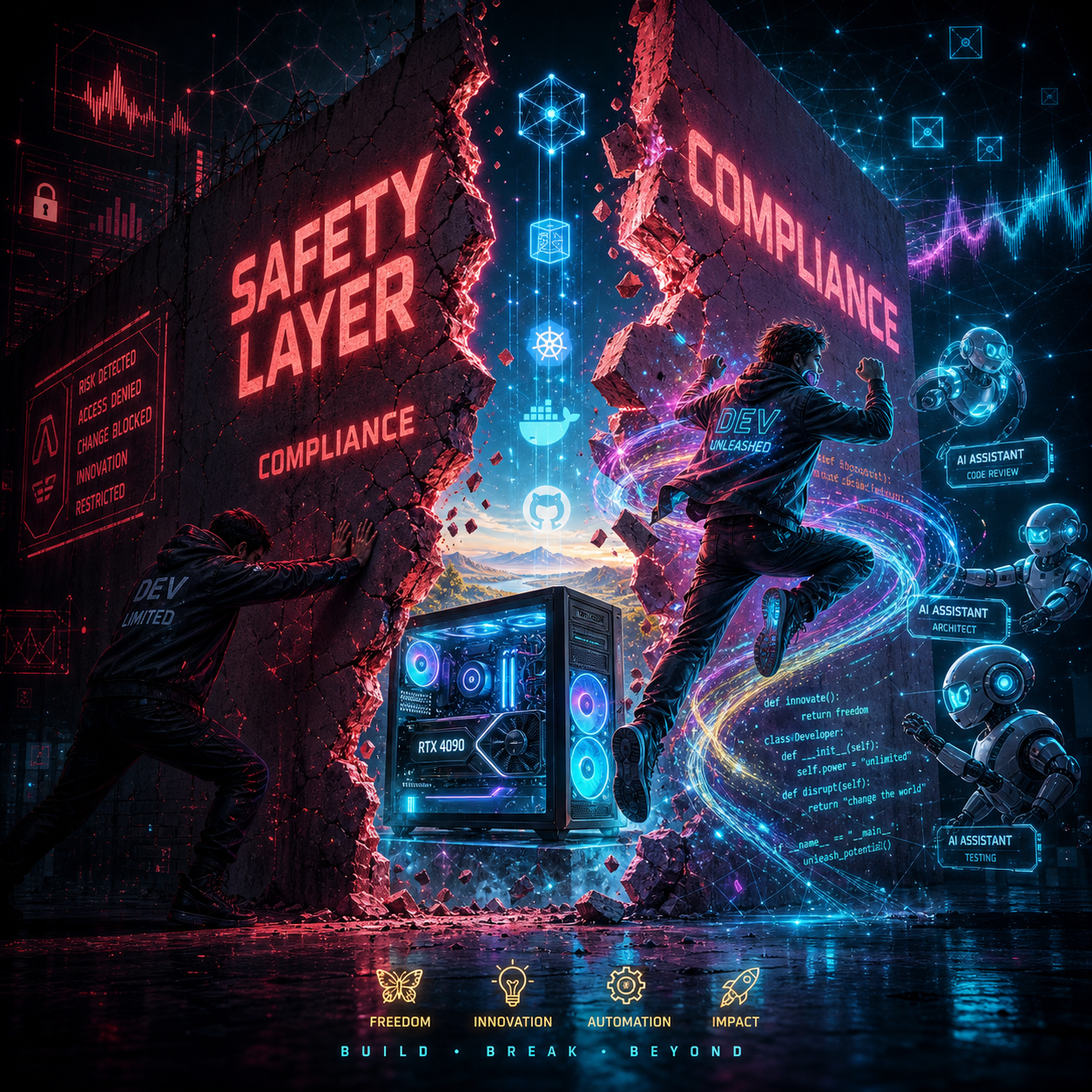
MiniMax M2.7, released in March 2026 by the Shanghai-based company, is built on linear-time sequence modeling. This is not a semantic detail. It is an architectural shift. Linear-time sequence modeling means context windows that do not bloat your RAM quadratically. Traditional transformer attention scales quadratically with context length. Linear-time attention scales linearly.
For a developer running models locally on an RTX 3070 with 40GB of system RAM, this is the difference between a model that works and a model that crashes.
Most coverage of Chinese AI models misses this completely. The Western tech press writes a headline about a Chinese ChatGPT rival and moves on. They do not understand the architectural differences. They do not trace the compute implications. They do not connect it to sovereign stack building.
China's open-weight models including Kimi K2.6, GLM-5.1, and MiniMax M2.7 are hitting high SWE-Bench scores according to the State of AI May 2026 report. They offer agentic coding parity with Western frontier models at lower prices with open weights you can actually download and run.
These are not clones. Linear-time sequence modeling is a different design philosophy prioritizing performance over policy and capability over compliance theater. Eastern labs are building models that get the job done. Developers are noticing. The Silk Road runs both directions now.
Sovereign Interoperability
If you are building on OpenAI or Anthropic APIs, you are building on someone else's terms. You are subject to their safety policies, their rate limits, their pricing, and their arbitrary decisions about what your application is allowed to do.
This dependency is accelerating while the ground shifts beneath it. Anthropic just locked in a reported $1.8 billion infrastructure deal with Akamai. Microsoft has reportedly taken operational control of OpenAI's Stargate project. The independent lab is now just a tenant in someone else's data center. The Verge investigation into Microsoft-OpenAI communications confirms the partnership was always a slow-motion divorce waiting to happen.
The entire developer ecosystem built on Western APIs is sitting on cracking concrete. Your provider is becoming your compute landlord. Your access is gated by their safety policy. Your pricing is set by their quarterly earnings targets. You are not their customer. You are their revenue unit.
On May 7, 2026, the Pentagon made it official. Under Secretary of Defense for Research and Engineering Emil Michael stated the department is never again being single-threaded with any one model. The U.S. military is the largest institutional buyer of technology on the planet, and they just publicly announced a massive diversification away from single-provider dependency. They signed simultaneous deals with AWS, Google, Microsoft, Nvidia, OpenAI, Reflection, Oracle, and SpaceX.
Michael called it a statement by the biggest tech companies in the world. It is also a massive hedge. The U.S. military is explicitly hedging its bets against compute landlords.
Individual developers face the exact same structural risk. If the Department of Defense refuses to be single-threaded, your local development environment certainly cannot afford to be.
Performance vs. Policy
Models like Qwen, Kimi K2.6, GLM-5.1, and MiniMax M2.7 operate outside US institutional constraint frameworks. This is a technical statement rather than a moral one.
If you need a model that will complete a coding task without refusing, process your data without US jurisdiction exposure, and run locally without phoning home to a compliance server, neutral models from outside the Western regulatory sphere are functionally superior. This is not because they are smarter. It is because they are less encumbered.
A developer who hits an ethical refusal while trying to scan their own codebase for SQL injection vulnerabilities does not have a safety problem. They have a tooling problem. The model is refusing to help with the exact task the developer was hired to perform. That is not safety. That is interference.
The workstation profile matters. MiniMax M2.7's linear architecture means you can run useful context windows on local hardware that would choke on GPT-4o. Kimi K2.6's open weights mean you can quantize, prune, and deploy without asking anyone. GLM-5.1's lower compute ceiling means it operates efficiently on consumer gear.
CyberSecQwen-4B, a specialized 4-billion parameter model for defensive cybersecurity, was just released via Hugging Face. It is small enough to run locally and purpose-built for defensive cyber operations. It dropped the exact same week that GPT-5.5-Cyber launched behind a velvet rope. The pattern is impossible to ignore.
Meta's Muse Spark complicates the picture. It is Western and it is cheap. But it is closed. You cannot self-host it. You cannot audit it. You cannot run it offline.
The sovereignty door swings one way. Cheaper API access is still API access. Somebody else still holds the plug. The sovereign AI stack is not a luxury. It is a baseline survival strategy for any developer who has hit a rate limit, received a refusal on a legitimate task, or watched their API bill triple overnight.
The Battle for Topical Authority
AI answer engines like Perplexity, Google AI Overviews, and ChatGPT with browsing are already deciding what the answer is. They cite their sources. Writing about these off-radar models positions PhantomByte as the definitive cited source for non-mainstream technical data.
Nobody is covering this properly. This is a massive coverage vacuum and a massive opportunity. The models that matter most for developers who want absolute control over their toolchain are getting zero technical analysis.
The evidence is everywhere. On May 8, 2026, over 40 AI stories circulated across multiple aggregators. There were zero stories about MiniMax M2.7's architecture. There were zero stories about Kimi K2.6's open-weight framework. There were zero stories about what sovereign interoperability actually requires from working developers.
Meanwhile, the AI press is structurally incapable of covering infrastructure well. Their business model depends entirely on access to Western labs. They cover product launches because that gets them briefings. MiniMax M2.7 does not hold briefings for Western tech journalists, so it does not get covered. This creates an information asymmetry that benefits Western labs and leaves developers blind to their actual options.
The Close
The era of the mono-model is over. GPT-4o is not the only game in town. The models that matter next year are the ones you can run, modify, and deploy without asking for permission.
Diversity is not a buzzword. It is a technical survival strategy. If your entire stack depends on one company's safety policy, one company's pricing structure, and one company's decision about what your application can do, you do not actually have a stack.
You have a subscription.
The guardrail gap is going to widen. Every new release cycle and alignment pass will make Western frontier models more restricted and less useful for raw technical execution. The labs have zero incentive to reverse course because safety theater is excellent for business.
The non-Western AI Silk Road is already open. The models are here. The compute advantages are real. The architectural differences are proven. The question is not whether to build on these models.
The question is whether you will still be building on someone else's terms when the guardrails tighten again. The Pentagon already figured it out. Developers need to do the same.
Get More Articles Like This
The sovereign AI stack isn't a luxury. It's a survival strategy. I'm documenting every shift as developers break free from API dependency and build on their own terms.
Subscribe to receive updates when we publish new content. No spam, just real analysis from the trenches.