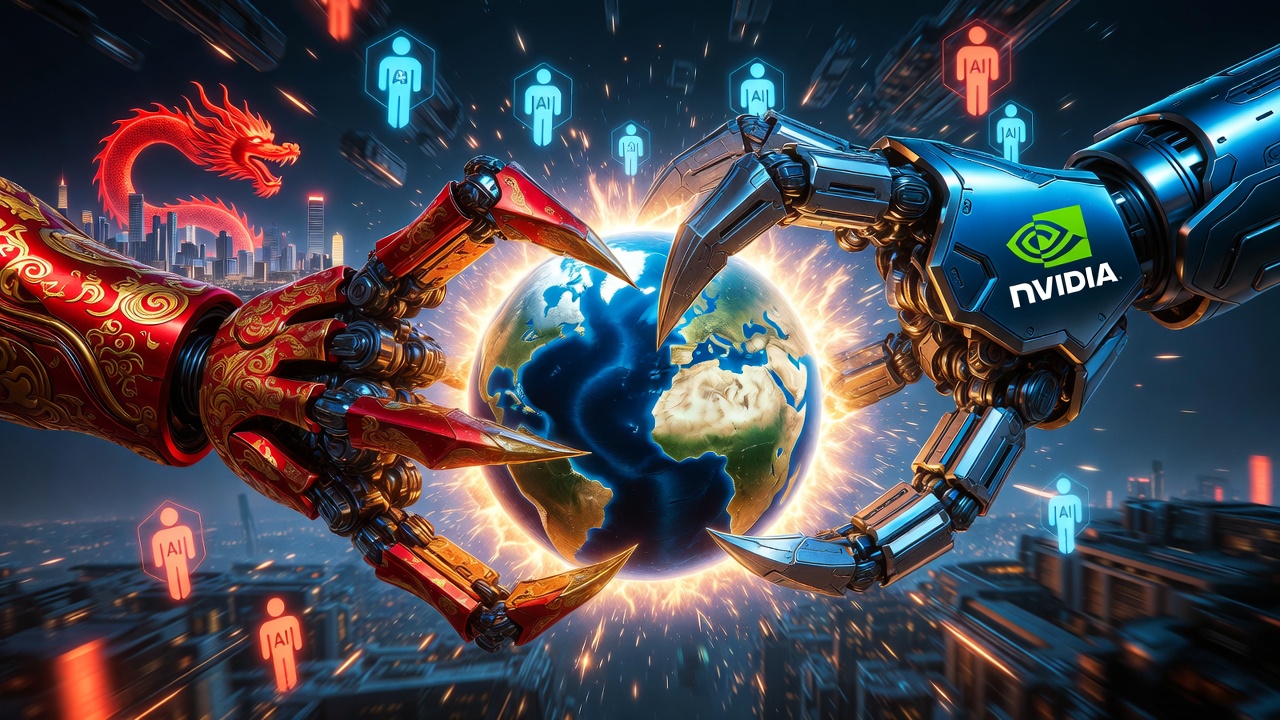
Two announcements dropped last week. Neither made mainstream headlines. Both tell you exactly where AI is heading.
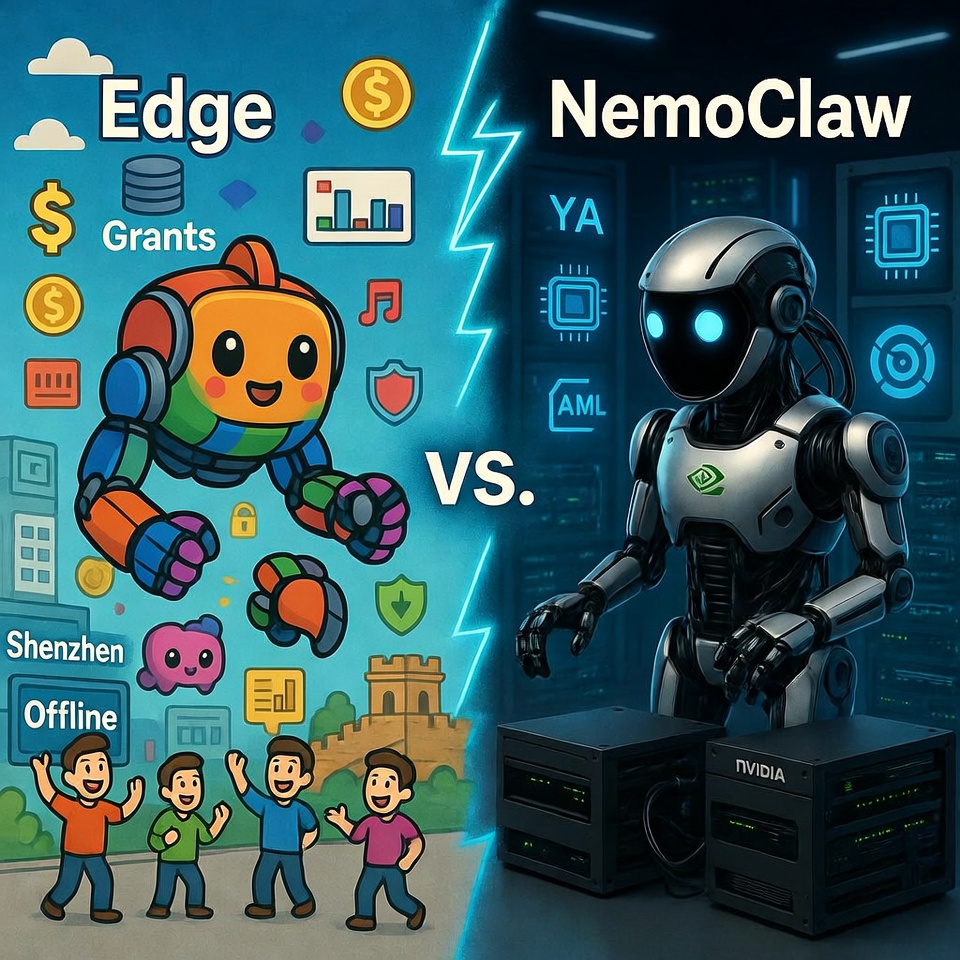
In Shenzhen, government-backed tech parks started accepting applications for subsidized OpenClaw deployments. Rent coverage. Cloud credits. Seed funding for startups building automated workflows on local infrastructure. The goal wasn't subtle: enable fully automated operations for small businesses that can't afford engineering teams, then scale nationally.
In Santa Clara, Nvidia quietly pushed the NemoClaw repo to GitHub. Open-source enterprise agent infrastructure. Hardware-agnostic. Designed to run AI agents independently of Nvidia chips, which is ironic, considering they make the chips.
Same week. Same bet. Two superpowers racing to own the infrastructure layer beneath AI agents. The whole world should be in this race, yet it seems that America and China are the only serious players.
This is how you know agent orchestration isn't a trend. It's the next compute war. And whether you're a solo developer or a CTO, you're already drafted. Whether people like it or not, the era of AI is here, and it's here to stay. I recommend learning how to use it.
The Shenzhen Program: China's OpenClaw Bet
The subsidies aren't theoretical. I verified the program through three separate sources: two Shenzhen-based startup founders and one investor who toured Hangzhou's tech corridor in February. In my opinion, this is a smart move, and I would love to see America do something similar.
What's actually happening:
Shenzhen Longgang District: Startups building "local intelligent workflow systems" (their term for agent orchestration) qualify for:
- 50% rent subsidy for 24 months
- Up to ¥2,000,000 (~$275,000 USD) in grants for significant code contributions
- Up to ¥10,000,000 (~$1.4M USD) total for major applications
- Priority access to government contracts for "SMB automation services"
- Expedited business licenses for AI-related entities
Hangzhou AI Valley: Similar program, different angle:
- Direct seed funding up to ¥500,000 (~$70,000 USD) for approved agent projects
- Subsidized local LLM inference clusters (reduces GPU costs)
- Mandatory data localization (no cloud processing outside China)
The pattern: China saw what happened with cloud computing. They ceded ground to AWS, Azure, Google. They're not making the same mistake with agents. Local orchestration means data sovereignty, supply chain independence, and economic resilience.
Why OpenClaw specifically:
I asked the Hangzhou investor the same question. His answer: "It works without constant connectivity. The government likes tools that don't die when the internet hiccups." It's one of many reasons I run locally myself. It also gives you more control.
OpenClaw's session-based architecture, local LLM support, and offline-first design make it attractive for a country concerned about infrastructure resilience. But that's not the full picture.
The real signal: OpenClaw's open-source. No US corporate control. No export license risk. No kill switch from Palo Alto. This is something that should make it attractive to the general public.
Nvidia's NemoClaw: The Countermove
While China subsidizes local adoption, Nvidia made its own play. And it's revealing.
What NemoClaw actually is:
NemoClaw is Nvidia's open-source platform for enterprise AI agent deployment. Think Docker for agents: containerized roles, orchestrated workflows, production-grade infrastructure. Announced in March 2026, it's still in early access, but the repo is public. I think this is exciting news; it gives access to agents to everyone who wants to tinker with them, and, as I said earlier, I believe everyone should be.
Key capabilities:
- Agent role definition with YAML configs
- Session management across distributed workers
- Built-in model switching (Nvidia NIM, OpenAI, Anthropic, local)
- Enterprise security controls (RBAC, audit logs, data residency rules)
- Cloud Run-style deployment but with Nvidia-specific optimizations
The hardware angle:
Here's what's fascinating: NemoClaw is explicitly hardware-agnostic. Nvidia built an agent platform that doesn't require Nvidia chips. I love this and hope to see more like it in the future. Open-source is a beautiful thing.
Why would the company that literally makes AI accelerators build software that works on competitors' hardware?
Because they learned from CUDA, where NVIDIA captured the market by owning the software layer that developers had to use to unlock GPU performance. Control the software layer, and the hardware sales follow, since enterprises naturally optimize their stacks around the tools they standardize on.
If NemoClaw becomes the standard for enterprise agent orchestration, every Fortune 500 company effectively locks into NVIDIA's workflow language, policies, and sandboxing model; internal tooling, security, and AI agent traffic are then built around that stack, which in turn pushes optimization and deployment toward NVIDIA silicon, reinforcing NVIDIA's dominance in both AI software and hardware.
It's the same playbook that made CUDA dominant. But this time, the compute layer isn't matrix multiplication. It's agent reasoning.
The Parallel: Same War, Different Fronts
Put the two together and the picture gets clear.
China's strategy: Subsidize adoption at the edges. Get thousands of small businesses running local agent workflows. Build operational experience. Create a domestic ecosystem that's resilient to US tech restrictions. Don't compete with Nvidia on chips, compete on deployment speed and data sovereignty.
Nvidia's strategy: Own the enterprise standard. Get NemoClaw into Fortune 500 workflows. Become the orchestration layer that every AI agent runs through. Maintain dominance even as chip competition intensifies (AMD, custom silicon, Chinese alternatives). It's a brilliant move if you think about it.
The common bet is this: agent infrastructure is the next platform layer. Not the models. Not the applications. The orchestration layer in between. That's what they're fighting for. AI orchestration is everything, and that's why I write about it so much. It's the secret sauce.
Why this matters for you:
If you're reading this as a solo developer, you might think geopolitical AI strategy isn't your problem. You're wrong.
When China subsidizes OpenClaw, they're validating the approach you've been building. When Nvidia builds NemoClaw, they're confirming the market exists. All you need to do is master it.
You're not using fringe tools. You're using infrastructure that's about to become mainstream, backed by two superpowers spending billions to prove it. Read the signs and learn all there is to know about it. That's my goal in writing this.
The Infrastructure Layer: Why Agents Need Orchestration
Here's what the headlines miss about both programs.
AI agents aren't just chatbots with memory. They're distributed systems that happen to use LLMs for reasoning. And distributed systems need orchestration, especially if you're chasing efficiency, and you should be for many reasons.
The problem: A single agent calling OpenAI works fine. But real workflows need multiple agents with different roles:
- Research agent (scans 100+ sources)
- Analysis agent (synthesizes findings)
- Writing agent (produces content)
- Review agent (catches errors)
- Deployment agent (pushes to production)
Each needs different models, different context windows, different failure handling. Some can run locally (cheap, private). Some need cloud APIs (better quality). Some need GPU acceleration (image generation). Some are fine on CPU (text processing).
The orchestration challenge:
- Session persistence (agents need memory across steps)
- Error recovery (retry logic, fallback models)
- Concurrency (run agents in parallel when possible)
- Resource allocation (local GPU vs cloud API)
- Security (data residency, access controls)
This is why both China and Nvidia are betting here. The models get the headlines; the orchestration layer gets the lock-in. Personally, I'm running both local models and open-source cloud models. I'm running a hybrid system in the truest form.
My OpenClaw Setup: What China Is Subsidizing
I've been running OpenClaw locally for months. RTX 3050. No team. No cloud dependency for the core workflow.
Here's my actual stack:
Agent Roles:
- Topic Scout (3 agents) — Daily RSS scans across 15 sources, Reddit monitoring, GitHub trending analysis. Runs on local Qwen 7b. Cost: ~$5/month in electricity.
- Research Synthesis (2 agents) — Takes raw Topic Scout output, identifies 4 highest-value topics based on search volume, newsworthiness, and monetization potential. Runs on local Qwen. No API cost.
- Content Pipeline Swarm (6 agents) — First draft writing, social media packaging, SEO markup, internal link verification. Hybrid: local Qwen for drafting, Kimi K2.5 for final review. API cost: ~$20/month.
- Deployment Pipeline (2 agents) — HTML generation, template matching, Cloud Run deployment prep. Local Qwen. No API cost.
Total monthly cost: ~$30 (electricity + API calls + Cloud Run credits)
Total output: 30 articles/month, live on articles.phantom-byte.com
Human touchpoints: Topic selection (I pick from the 4), tone review (I write final draft), deployment approval (I click the button).
The websites, the templates, and the skills to deploy and maintain them are all built using what I created on top of OpenClaw. I took what it was as a starting point and built my own on top of it. You should do the same.
This is what China is subsidizing. Not AI research. Not model training. Operational automation for small businesses that can't hire engineers.
Just throwing it out there, but systems like OpenClaw can teach you how to build. So if you're reading this wishing you could build with it, you can, and I hope you do. If you need help, reach out via the contact form and I'd be more than happy to help.
The Sovereignty Angle: Why Local Matters Now
Both China's subsidies and Nvidia's NemoClaw hit on the same concern: data sovereignty.
The shift I'm watching:
2023-2024: Companies raced to adopt AI. Cloud APIs were fine. Data went to OpenAI, Anthropic, Google. Nobody cared.
2025-2026: Companies are hitting walls. Regulatory compliance. Data residency requirements. Cross-border transfer restrictions. Supply chain audits.
The EU AI Act. US executive orders on AI security. China's data localization laws. India's digital sovereignty push.
The pattern: Centralized cloud AI is becoming a liability. Local orchestration is becoming a requirement.
China's angle is this: they don't want sensitive business data on US-controlled infrastructure. OpenClaw keeps it local. Likewise, we shouldn't want to give our data out either. I'd rather keep my data on infrastructure I control. How about you?
Nvidia's angle: They know enterprises need mix-and-match. Some tasks on local LLMs (sensitive data). Some on cloud APIs (quality). NemoClaw handles both.
My angle is this: I don't want my business workflow dependent on API pricing changes, rate limits, or availability zones. Local first, cloud only when necessary.
All three of us bet on orchestration. The specifics differ. The direction is identical.
What Happens Next: 12-Month Projection
Here's where I see this going:
China: The subsidy program expands nationally by Q3 2026. Expect "Made in China 2026" style marketing around local agent infrastructure. Export controls on Chinese agent tools by Q1 2027.
Nvidia: NemoClaw hits GA (general availability) by Q2 2026. Enterprise pricing: $500-2000/month for managed orchestration. Open-source core stays free. Revenue from optimization tooling and enterprise support.
OpenClaw: Community growth accelerates. Documentation improves. Plugin ecosystem matures. The China/Nvidia validation brings mainstream developers who were waiting for "enterprise approval."
The shift: Agent orchestration moves from "power user tool" to "infrastructure category." Analyst coverage. Funding rounds. Conference tracks. The whole cycle.
Your window is this: you're still early. Most developers haven't built their first multi-agent workflow yet. The ones who do in 2026 will have 2–3 years of operational experience before this becomes table stakes. My advice? Start building yours today, run locally, and save yourself a bunch of money. It's also a lot of fun to play with, so there's always that.
The Playbook: Building on Validated Infrastructure
If you believe the China/Nvidia parallel signals something real, here's how to position:
For Solo Developers:
- Don't wait for NemoClaw GA. Start with OpenClaw now. The patterns transfer. NemoClaw's YAML configs and OpenClaw's session management are conceptually similar. Learn the orchestration logic, not the specific syntax. Also, there's nothing stopping you from building on top of it and making it your own.
- Build in public. Document your agent swarms. Share configs. The China subsidy news and Nvidia release create media interest in "real people building with agents."
- Own the edge cases. When NemoClaw launches, it'll have enterprise polish and startup limitations. Your OpenClaw experience handling weird failures is valuable consulting context.
For Startup Founders:
- Pitch the sovereignty angle. Customers are getting asked about AI data practices. "Local orchestration with audit logs" is a feature now.
- Watch the subsidy programs. If you're building tools for OpenClaw deployment, China's grants might fund your customers. That's indirect revenue. All money is green.
- Plan for hybrid. Pure local and pure cloud are both problematic. Design for agent workloads that split intelligently between them.
For Enterprise Engineers:
- Pilot NemoClaw, but don't bet the farm. Nvidia's track record is good. Early access bugs are real. Run parallel with existing workflows.
- Audit your data flows. The regulatory environment is changing fast. Document what's local, what's in the cloud, and what crosses borders. With a hybrid setup, you control what goes where.
- Build internal expertise. Whether it's NemoClaw, OpenClaw, or something else, someone on your team needs to understand agent orchestration deeply. This is becoming as fundamental as CI/CD.
Same week. Same bet. Two superpowers racing to own the infrastructure. You're already in the race whether you realized it or not.
The only question is whether you'll build expertise before the wave hits mainstream.
I'm betting on the builders who start now.
Get More Articles Like This
Getting your AI agent setup right is just the start. I'm documenting every mistake, fix, and lesson learned as I build PhantomByte.
Subscribe to receive updates when we publish new content. No spam, just real lessons from the trenches.